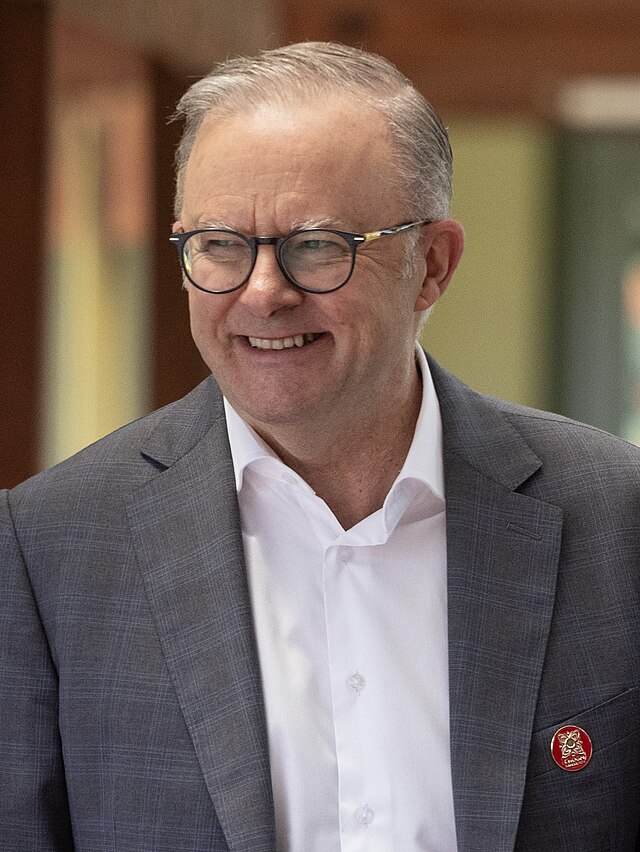
Australia‘s prime minister, Anthony Albanese, said the country had given Iran’s ambassador seven days to leave and would suspend operations at its embassy in Tehran. The move followed intelligence from ASIO, the security agency, that the Islamic Revolutionary Guard Corps was behind two antisemitic terror attacks in Australia: the firebombing of Lewis’ Continental Kitchen, a kosher restaurant in Sydney, in October 2024, and the arson attack on the Adass Israel Synagogue in Melbourne in December, when masked men poured fuel on the floor and set the building alight, causing major damage. The government also said it would designate the IRGC a terrorist organization. It is the first time Australia has expelled a foreign ambassador since World War II.
Iran’s judiciary has indicted Abolfazl Zohrevand, a conservative lawmaker from Tehran and member of the parliamentary National Security and Foreign Policy Committee, over remarks deemed harmful to the regime’s legitimacy. Zohrevand claimed that hidden, unaccountable forces were steering the country, accused state institutions of weakening the system from within, and argued that the government was effectively working to end the Islamic Revolution and dismantle the current order. Local media described his comments as spreading fear and distorting reality. Prosecutors in Tehran have opened a criminal case against him, which has now been referred to court.
Iran’s Judicial head, Gholam-Hossein Mohseni-Eje’i, announced his intention to prosecute the signatories of the statement recently issued by the Iran Reform Front. The declaration, which we reported on last week, urged the government to suspend uranium enrichment, accept full monitoring by the International Atomic Energy Agency, and implement structural reforms including a general amnesty for political prisoners and changes in domestic and foreign policy. Mohseni-Eje’i hinted that the signatories were acting under foreign influence, denounced the move as a “disgraceful act”, and confirmed that judicial proceedings have been initiated against those involved.
In a recent stand-up performance, Iranian comedian Zeinab Mousavi sparked controversy after making sexually explicit jokes that referenced the Shahnameh, the national epic by Ferdowsi and a cornerstone of Iranian culture. Mousavi had previously been arrested for criticizing the regime and had her Instagram account shut down by the authorities. Critics argued that the act lacked artistic depth and disrespected values central to national identity, particularly at a time when cultural cohesion is seen as vital. On social media, some countered that the backlash illustrated the enduring clash between tradition and modern satire in Iran today.
Image by Simon Dawson, licensed under CC BY 2.0. https://creativecommons.org/licenses/by/2.0/