In yesterday’s round of nuclear talks on the “snapback” deadline, held in Vienna and Geneva, diplomats from Britain, France, and Germany pressed Iran to restore cooperation with the IAEA, allow full inspections, and clarify the scale of its uranium enrichment, warning that failure to act would trigger the UN “snapback” mechanism before it expires in October. The countries expressed concern that enrichment at 60% posed a grave proliferation risk and undermined trust in Iran’s intentions. Iranian officials rejected these demands as illegitimate and politically motivated, asserting their sovereign right to pursue nuclear technology. Iranian Foreign Ministry spokesman Esmaeil Baghaei warned that any move to reimpose sanctions would bring “serious consequences.” Russia, with support from China, has proposed a six-month extension to the “snapback” deadline, pushing its expiry to mid-April 2026; however, neither Russia nor China has the authority to veto the re-imposition if Europe chooses to trigger it.
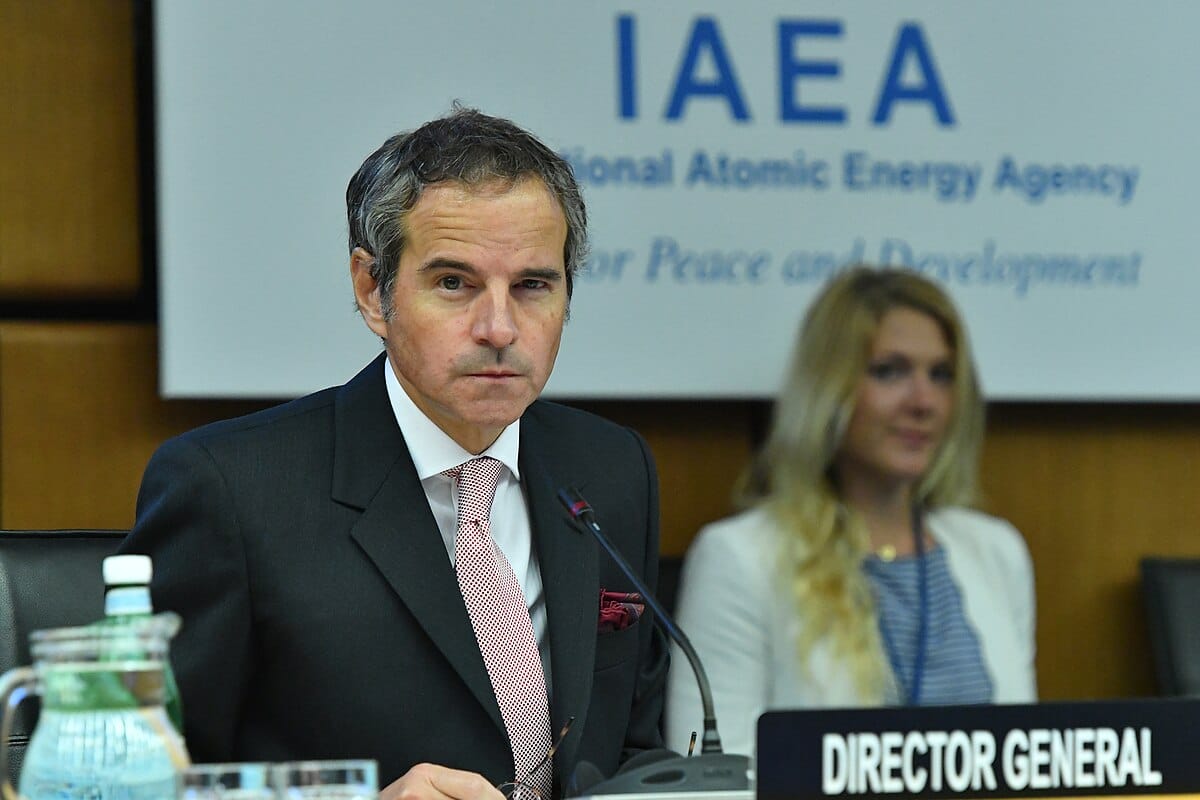
According to the Wall Street Journal, Rafael Grossi, Director General of the IAEA, has been placed under 24/7 protection after Austrian intelligence received specific threat information indicating that individuals linked to Iran posed a danger to him. Grossi is now reportedly guarded by EKO Cobra, Austria’s elite police tactical unit. Iranian officials and media have accused Grossi of bias, claiming his reports favored Israel and even blaming him for sparking the June 2025 conflict, with calls for his removal or prosecution. In June, Ali Larijani, a close adviser to Supreme Leader Ayatollah Ali Khamenei and head of Iran’s National Security Council, warned Grossi on X: “When the war ends, we are going to deal with Grossi”. The Iranian newspaper, Kayhan, labeled Grossi an “Israeli spy” and advocated for his detention and execution.
This week, Iran marks its annual Government Week, held under the theme “12 Months of Effort, 12 Days of Defense,” as part of their attempt to build a heroic narrative of the 12-day war. In a statement marking the occasion, the Iranian Army emphasized the importance of national unity, declaring: “In light of the plots of our enemies, today more than ever we need cooperation and solidarity between the people and the officials.” The message extended congratulations to all devoted public servants and underscored that both the government and the armed forces operate under the leadership of the Supreme Leader, the ultimate authority of the Islamic Republic of Iran. Government Week commemorates the 1981 assassination of President Mohammad-Ali Rajai and Prime Minister Mohammad-Javad Bahonar, who are honored as enduring symbols of service and sacrifice. Each year, the occasion combines memorial ceremonies with government-led events, showcasing achievements, public reports, and infrastructure projects.
Investigations have concluded that there has been a sharp rise in executions and reports of grave site destruction in Iran, following the 12-day war with Israel. The Abdorrahman Boroumand Center for Human Rights in Iran estimates that at least 730 people have been executed in the past seven months, including more than 100 in July alone. A Center for Human Rights in Iran report reveals that authorities have begun leveling mass grave sites in Tehran’s Behesht Zahra Cemetery, where victims of the 1980’s massacres of political prisoners are buried, atrocities UN experts classify as crimes against humanity. Satellite imagery presented by BBC Persian and official admissions from Tehran’s deputy mayor and cemetery officials confirm that thousands of square meters have been cleared to build a parking lot. Amnesty International has condemned the move as the destruction of crucial evidence, warning it violates international law, while the UN High Commissioner for Human Rights has urged Iran to halt executions and preserve grave sites.
In a recent interview with Asharq Al-Awsat newspaper, Iranian Foreign Minister Abbas Araghchi warned the Gulf states that Israel’s policies could potentially trigger the closure of the Strait of Hormuz, a vital maritime artery through which approximately 20% of global oil shipment pass. He emphasized that closing the Strait of Hormuz is not Tehran’s official stance, reaffirming that Iran’s policy is to preserve peace and stability in the Persian Gulf, as its economy relies on oil exports and free navigation. Araghchi also urged Arab states to sever relations with Israel as a gesture of solidarity with Gaza and warned that Iran could strike Israel again should circumstances necessitate it.
Image by IAEA Imagebank, licensed under CC BY 2.0. https://www.flickr.com/photos/35068899@N03/50008788952/