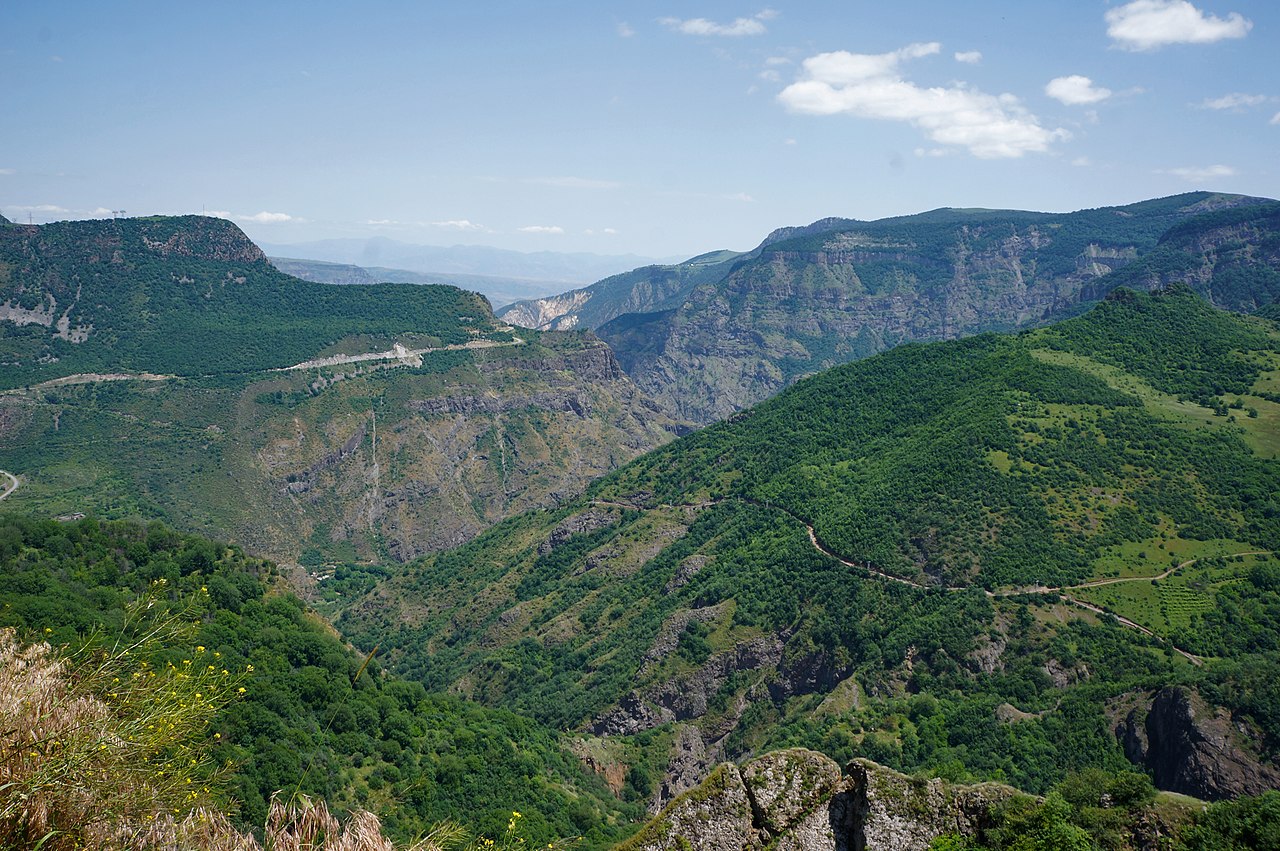
The Zangezur Corridor, a new transit route linking East Asia to Europe via the Caucasus, is chipping away at Russia’s traditional dominance while entrenching America’s. Washington has just brokered a peace deal between Azerbaijan and Armenia, ending four decades of conflict, and is now poised to shape the corridor’s development, not least through Armenian-American firms. For Iran, the project is seen as yet another blow to its regional standing, following the fall of the Assad regime, its ally in Damascus, and the decline of Iranian-backed militias across the Middle East.
While there appears to be consensus in Tehran that the Zangezur Corridor threatens national security, the contrasting narratives reveal a deeper rift within Iranian society. Hardliners have responded with sharper anti-Western rhetoric. Ali Akbar Velayati, a senior adviser to the Supreme Leader, vowed that Iran would answer what he called “destabilizing attempts” in the region. Yadollah Javani, an IRGC brigadier general, went even further: invoking NATO’s expansion in Europe, he hinted at the prospect of armed conflict spilling into the South Caucasus. Meanwhile, the Pezeshkian government has sought to rein in the Hardliners’ rhetoric. President Pezeshkian argued that the press has exaggerated the issue. Yet, his more diplomatic posture, exemplified by a recent visit to Armenia, also seems to displease the Reformist camp.
Many Reformists have faulted the Pezeshkian government for neglecting the Zangezur question. Their criticism goes beyond policy missteps: they want the administration to act. In an interview with Etemad, Fatemeh Moghimi of the Businesswomen’s Association urged the government to safeguard Iran’s interests by developing alternative routes, both through the North and via southern maritime corridors. One such alternative is the expansion of Chabahar port in Sistan and Balochestan Province. The government has courted local authorities in the South and even floated the idea of transferring the capital from Tehran to the Makran coast. Yet, such grand designs demand resources Iran lacks. An economy hobbled by inflation, fuel shortages, failing infrastructure, and recurring water and electricity outages leaves little room for major investment. For now, it is difficult to see how Iran could mount a credible alternative to the Zangezur Corridor.
In reality, the Zangezur Corridor is unlikely to threaten Iran’s economy. What it does reveal is the country’s geopolitical decline and widening internal divisions. In fact, the broad consensus that the project endangers Iran conceals ideological fault lines. Hardliners emphasize the menace of an American foothold on Iran’s borders and direct their ire at Azerbaijan for its pro-Western tilt. Reformists also worry more about Turkey’s rising influence. Following the collapse of the Assad regime last December, Ankara was widely viewed in Tehran as the chief beneficiary of shifting Middle Eastern dynamics. The Zangezur Corridor fits neatly into Turkey’s pan-Turkic vision of territorial continuity across Turkic states. For Iran, this raises another specter: that pan-Turkism could embolden its Azeri minority to press for collective rights—or even territorial autonomy. Iran’s Armenian community has recognized the danger, with its representatives echoing the official line and denouncing the project in an effort to head off any stirrings of anti-Armenian sentiment.
The Hardliners’ belligerent threats against the United States offer no path toward a viable solution for Iran. Their warlike statements, amplified by constant references to Iran’s military might, may be little more than rhetoric to recover from the recent 12-day war. They could also represent a calculated attempt to fuel anti-American sentiment at a time when Iran is seeking leverage in nuclear negotiations. Yet they might equally reflect the militaristic mindset that dominates the Hardliner camp, where the IRGC plays a decisive role in shaping policy.
Whatever the case, Iran faces an ever more complex scenario. The Zangezur Corridor magnifies the country’s strategic dilemmas, leaving only one realistic option: to question its own ideological premises. Some Reformist voices have already drawn comparisons with Turkey, arguing that Iran’s entrenched hostility toward the US has been a central cause of its decline since 1979. On top of that, the current government will have to face growing criticism from within the Reformist camp, which demands a clear stance on several issues and will inevitably lead to a serious confrontation with Hardliners. For their part, Hardliners cannot both attack President Pezeshkian and his government on one side while embracing the “national unity” discourse on the other to rally support for their militaristic plans. President Pezeshkian will soon have crucial decisions to make, as the Zangezur Corridor only amplifies the profound divisions that already exist over other issues, such as the nuclear negotiations.
What, then, is at stake in Zangezur? For Iran, far more than trade revenues. The corridor exemplifies the erosion of its regional clout, may raise uncomfortable questions about the state’s relations with its minorities, and exposes once again the bankruptcy of an ideology that cannot offer solutions to the country’s mounting economic and social woes. A government that calls itself Reformist yet shrinks from defending its own principles only deepens public frustration. The Zangezur Corridor has become not just a geopolitical challenge, but a mirror reflecting Iran’s strategic decline and its deepening domestic fractures.
Photograph: Armenak Margarian, Wikimedia Commons