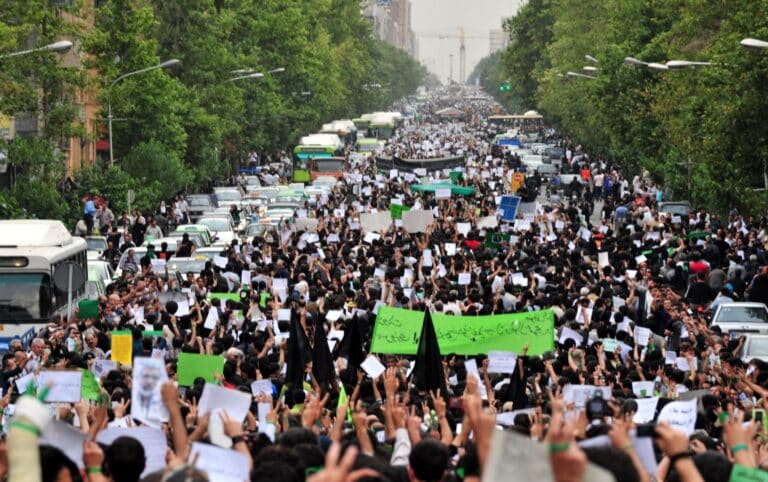
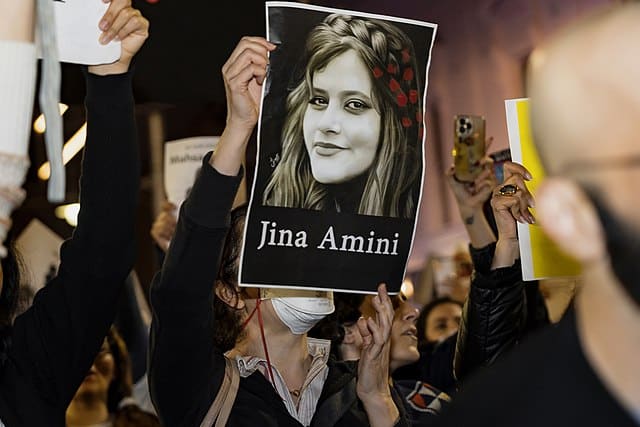
This week marks the third anniversary of the death of Mahsa Amini, the young Kurdish woman arrested violently by Iran’s morality police in Tehran for “improper hijab wearing”. Her death, on September 16, 2022, became a social milestone: millions took to the streets under the slogan “Woman, Life, Freedom.” Women removed their headscarves in front of cameras and the protest movement captured global attention, for a moment it seemed to herald a new chapter for women’s rights in Iran.
Today, in September 2025, the picture could not be more different. The mass outrage has ebbed, the streets are quiet, and the regime continues with the same methods of repression. Mahsa Amini has become a symbol, but the Iran of three years after her death looks strikingly similar to the Iran that was before.
Since September 2022, numerous incidents have echoed the circumstances of Amini’s death. In July 2024, Arezu Badri, a mother of two, was shot by security forces after they attempted to stop her car, their reasoning- it appeared on a list of “banned vehicles” linked to hijab rule violations. Badri was critically wounded; her family was barred from her hospital bedside and forced to accept the authorities’ version of events.
Only last month, an Iranian court handed down a death sentence to political activist Sharifeh Mohammadi. She had been subjected to intense physical and psychological torture during interrogation, and according to the human rights group Hengaw, she confessed under duress. These practices have become integral features of the Islamic Republic’s penal system.
In Iran of the Islamic Republic, even the most innocuous gestures of personal freedom are treated as existential threats. Last week, a video circulated from Shiraz showed a young woman dancing on-stage alongside small girls – without a hijab. Within hours, a parliamentary representative of the Fars Province demanded her prosecution, and the local prosecutor pledged the incident would be “dealt with decisively.” The incident demonstrates how deeply charged the issue of the hijab remains, and how the regime polices unveiled appearances as if it was a genuine threat to its stability.
The regime’s approach to hijab enforcement in recent years has been superficially flexible but fundamentally uncompromising. The backdrop to this issue is an ongoing political dispute: reformists argue for easing enforcement to reduce friction with the public, while conservatives insist the hijab law is a cornerstone of the Regime’s identity. This dynamic was exhibited last month when Mazandaran’s governor, Mehdi Younesi Rostami, caused uproar by remarking, “I do not believe in modesty and the hijab in a hungry society.” Within days, he was compelled to publicly retract his words and declare that “the hijab and modesty are fundamental principles for me.” The episode revealed the regime’s boundaries: even if there is room for tactical leniency in Hijab enforcement, the strategic message remains absolute – the compulsory hijab is a central instrument of control.
The real difference between Amini’s death and the cases that followed lies not in the severity of repression but in the public’s reaction. In 2022, shock and anger drove people to break through the fear barrier and flood the streets. Today, similar incidents pass almost silently. What once sparked nationwide protest now circulates briefly on social media before fading away.
The explanation is straightforward: the regime has driven home its lesson. Hundreds killed, thousands detained, quiet trials and heavy sentences – all conveyed a blunt message: dissent will be crushed with an iron fist. Exhausted and fearful, the people are wary of paying the price again. In some ways, this may be the greatest success of the Regime’s apparatus of repression: not in preventing violations of its rules, but in preventing any meaningful response or protest.
And yet, history teaches us that silence in Iran never lasts forever. Every few years, Iranians find a moment when fear cracks and suppressed national trauma erupts loudly. That moment will come, and when it does, Mahsa Amini will no longer be a muted memory, but the spark that ignites years of pent-up frustration. What follows may be unpredictable, but one thing is certain: future movements for change will know her name – and heed her lesson.
Photograph: Matt Hrkac, Wikimedia Commons