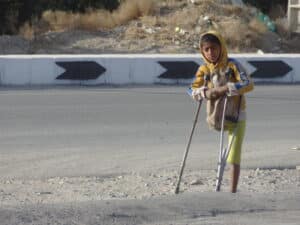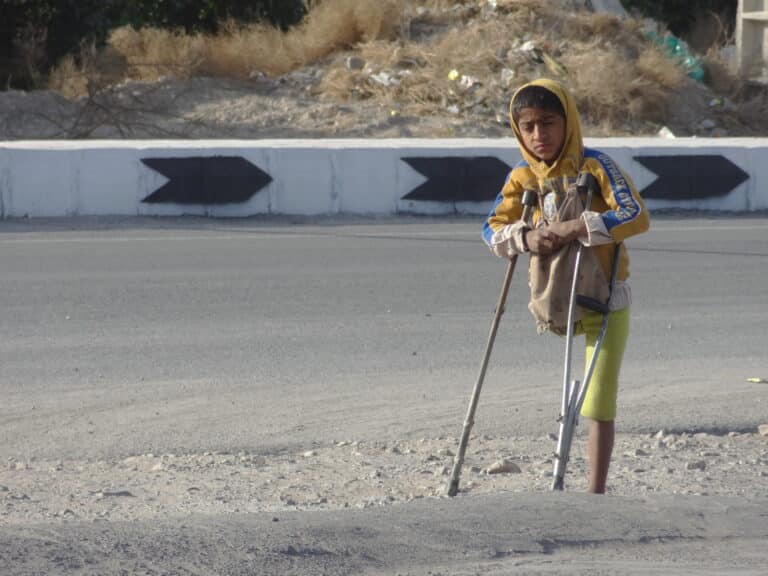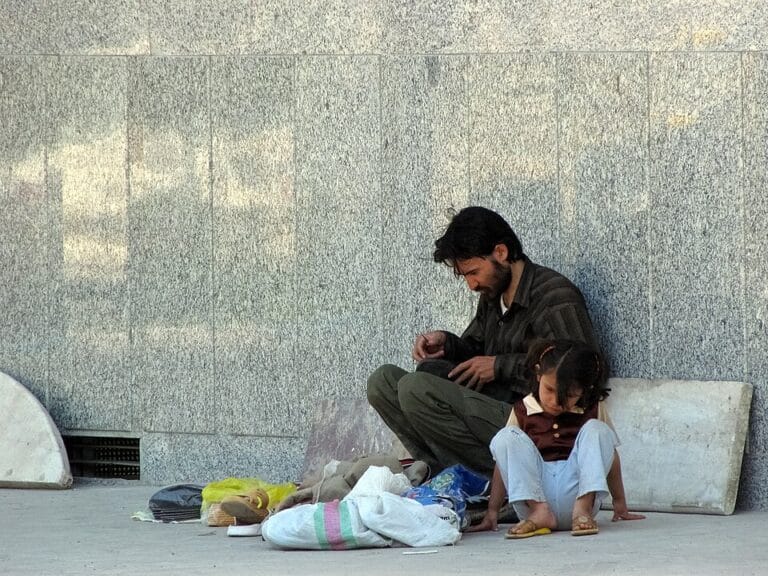

Iran announced that approximately 800,000 additional Afghan refugees will be expelled from the country by March 2026, as part of a phased plan to reduce the refugee population. The move follows earlier waves of deportations, which Tehran has justified on grounds of economic strain and security concerns. Foreign Minister Abbas Araghchi and a government spokesperson stated that the decision is aligns with Iran’s long-term national policy, while humanitarian organizations have raised concern about the social and human impact of mass expulsions. Afghanistan’s fragile economy and ongoing instability raise questions about whether Kabul can absorb such a large influx of returnees, potentially worsening humanitarian challenges in the region. According to UN agencies and IOM, a total of 1.109 million Afghans were deported from Iran in 2025.
Against the backdrop of Iran’s worsening water crisis, with nearly 90 percent of Iran’s freshwater consumed by farming, crop failures and reduced harvests are forcing the country to rely more heavily on imports, thereby pushing up food prices and aggravating global supply pressures. Amid rising food security concerns, Iran and Pakistan have moved to strengthen agricultural trade ties, setting an ambitious target of $3 billion in bilateral exchange within the next two years. This partnership is designed to harness each country’s agricultural strengths: Iran will expand exports of dairy, fruits, nuts, and vegetables, while Pakistan is expected to supply corn, rice, and livestock, directly addressing Iran’s food security gaps. Pakistan is hoping to supply up to 60 percent of Iran’s meat needs, helping Tehran cut its dependence on far-off suppliers like Brazil and lowering the cost of essential food imports.
Iran has unveiled its first indigenously designed and manufactured advanced class-F gas turbine, the MGT-75, a milestone in the country’s drive for energy independence. Built entirely by MAPNA Group’s turbine division (TUGA), the MGT-75 delivers 222 megawatts of power, placing it within the global standard range for F-class turbines. The machine incorporates advanced engineering features, including a 3D axial compressor, single-crystal and directionally solidified turbine blades with specialized cooling and thermal barrier coatings, and a can-annular combustion system capable of running on both natural gas and hydrogen, reducing emissions and enhancing flexibility. Designed to operate under Iran’s specific climatic and fuel conditions, the turbine is expected to modernize the country’s electricity generation, lower fuel consumption, and cut carbon output. Currently, Iran has about 5,000 MW of F-class capacity, but with expansion plans aiming for 10,000 MW within five years, the MGT-75 could help save up to 4 billion cubic meters of natural gas annually in combined-cycle mode.
A mural titled “Army Sacrifices for the Nation” was unveiled in Valiasr Square, Tehran, to pay tribute to the Iranian Army’s sacrifices during the 12-day war. Designed by artist Ali Khalaj and produced under the auspices of the Owj Arts and Media Organization, it features the names of the 57 martyrs, accompanied by the inscription: “The martyrs proved with their blood that the Army is sacrificed for the nation”. The mural is widely discussed as part of the local cultural and political conversation and Iranian outlets such as Tasnim News, Mehr News, IRNA, and SNN published detailed reports on the unveiling.
Iran has repeatedly leveraged cryptocurrency as a workaround to blunt the effects of U.S. and international sanctions, with several notable examples illustrating the strategy. In 2021, a blockchain analytics study revealed that Iran-based Bitcoin mining accounted for an estimated 4.5% of global mining output worth around $1 billion annually, providing the government with hard-to-trace revenue streams used to finance imports. That same year, Reuters reported that Iran was paying for sanctioned goods directly with Bitcoin mined inside the country, effectively transforming subsidized electricity into tradable digital assets. In August 2022, Iranian authorities confirmed the country’s first official crypto-funded import transaction valued at $10 million. Exchanges like Nobitex, the largest in Iran, have been central to these activities, with blockchain data showing links between the platform and wallets tied to sanctioned entities. U.S. regulators have also sanctioned Iranian individuals and networks for using crypto to funnel millions of dollars into Iran for ransomware payments and arms procurement.