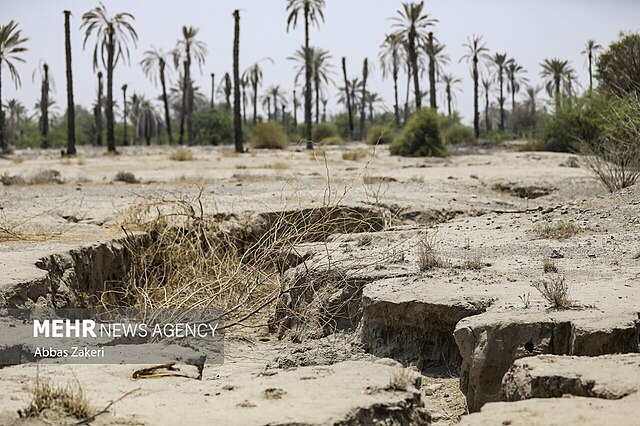
On August 2025, Iran’s agriculture minister admitted food security was at its worst in years. Days later, Iran’s statistics center published that official inflation surpassed 42%. This adds up to ongoing warnings that Tehran could run out of water within weeks and to present electricity rationing by the government.
Currently, Iran faces its worst economic crisis in decades with depleting water reservoirs, rolling blackouts across major cities, high inflation, devalued currency, collapsing banking system and shrinking economic activity. None of this is surprising. It is the predictable outcome of decades of failed economic management and misguided political choices.
On February 1st, 1979, after years in exile, Ayatollah Ruhollah Khomeini returned to Iran as the revolution’s victor. His arrival was hailed as triumphant after a long struggle and carried with it promises of democracy, clean government, and prosperity. Those promises were swiftly broken.
In its first years, the newly founded Islamic Republic of Iran was forced into a brutal war by Iraq, a war that imposed a heavy economic toll. During the eight years of war Iran’s GDP per capita decreased by approximately 44%.
After the war Iran used its abundant resources to export the revolution. According to the Wilson Centre, Iran’s annual expenditure on its proxies (Lebanese Hezbollah, Yemenite Houthis, Palestinian Hamas and Iraqi Shiite militias) were approximately 1 bn USD.
Moreover, Iran spent vast resources on its nuclear and ballistic missiles programs while bluntly threatening countries near and far. The inevitable result was a global effort to stop the threats posed by Iran, an effort that was accompanied by “maximum pressure” sanctions that cost Iran more than 3 trillion USD in direct cost and opportunity cost (loss of oil revenues, 98.8% depreciation of the Iranian real since 2012, loss of foreign direct investments, etc.). Based on Laudati and Pesaran’s (2022) paper in the Journal of Applied Econometrics, if not for the nuclear program and the resulting sanctions, the average Iranian could be earning twice as much as their current monthly income.
As of 2025, Iran stands among the most corrupt, economically shackled, and politically repressive nations in the world – ranked 151 of 180 in the Corruption Perceived Index, 169 of 184 in economic freedom, and condemned by Freedom House for its authoritarian grip.
A country blessed with immense wealth and resources has chosen to sacrifice its economy on the altar of the revolution. Instead of investing in water desalination or modern power infrastructure, Iran boasts arsenals of ballistic missiles and stockpiles of enriched uranium, while its own citizens are left thirsty and in the dark.
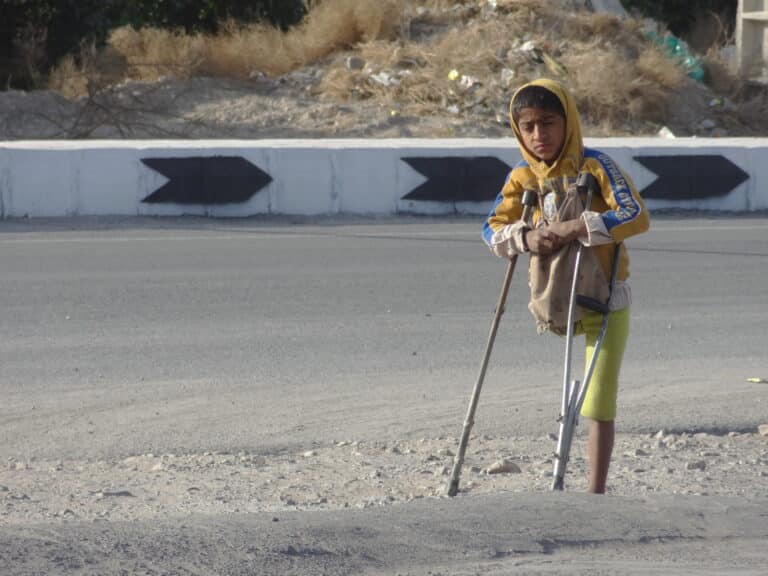
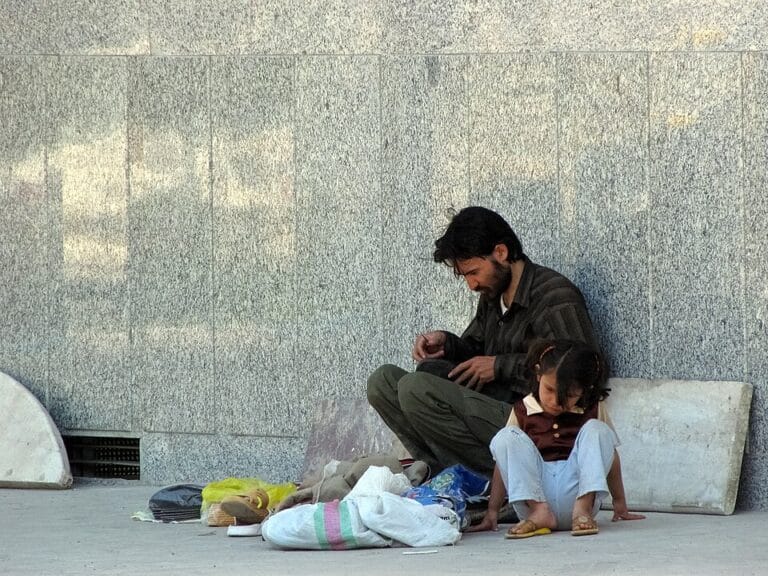
Photograph: Abbas Zakeri, Wikimedia Commons