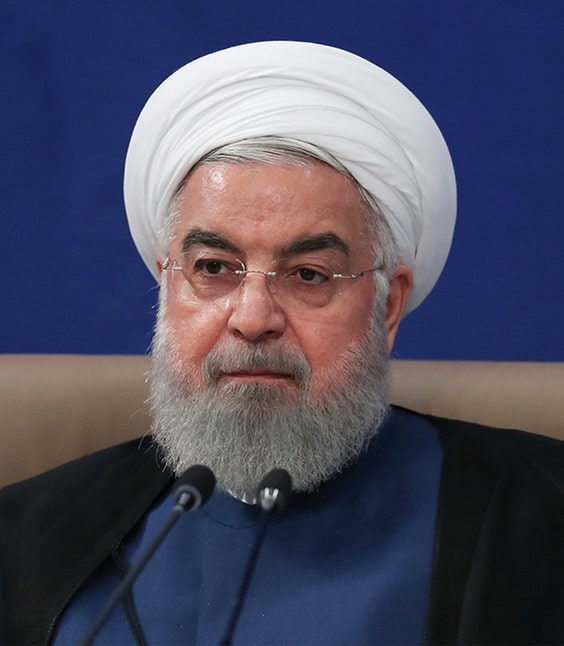
In a rare call for reform from within Iran’s establishment, former president Hassan Rouhani urged the country’s military and intelligence agencies – chiefly the Islamic Revolutionary Guard Corps (IRGC) – to withdraw from the economy and return to their core security duties. He is quoted as saying “An intelligence agency involved in commerce is no longer intelligence,” and he further linked IRGC’s involvement in the economy to corruption and public distrust. Rouhani also called for an independent judiciary and a more measured foreign policy to avoid unnecessary conflicts.
Iranian Foreign Minister Abbas Araqchi stated that Iran neither fears negotiations nor war and is prepared for all outcomes. He condemned the recent activation of UN sanctions through the triggering of the “Snapback mechanism” by Britain, France, and Germany, calling it illegal. He also stated that “No new cooperation will take place until the negotiations are concluded”, referring to the now non-existent cooperation with the IAEA. Araqchi also noted that Russia and China have proposed a Security Council resolution to counter the sanctions.
Mehdi Karroubi, a veteran opposition figure, warned that Iran is in a “dangerous and critical” state and called for regime leadership to return to the people. In a meeting with members of the Organization of the Mojahedin of the Islamic Revolution, he called for admitting past mistakes, ending political monopolies, and abandoning failed domestic and foreign policies. Karroubi backed direct talks with the U.S. to lift sanctions and ease public suffering, saying the revolution was meant to end authoritarianism – not leave people without gas, water, or electricity.
United States Republican Senator, Tom Cotton, has urged the FBI and Department of Defense to investigate what he calls a coordinated Iranian effort to infiltrate U.S. national security. Cotton was referring to recent manipulations carried out by the Iran Expert Initiative (IEI) – a network allegedly linked to Tehran’s foreign ministry, aimed at promoting regime interests abroad. In a letter, Cotton highlighted concerns over Ariane Tabatabai, an Iranian-American academic and former adviser to Robert Malley, who now holds a senior Pentagon role. He warned that her continued ties to the U.S. intelligence community raise “serious counterintelligence concerns,” and called for the removal of any officials connected to IEI. Cotton criticized the Biden administration for ignoring earlier warnings and urged immediate action.
Homayoun Shajarian, one of Iran’s most celebrated vocalists, announced the cancellation of what was set to be the largest free street concert in the country’s history, planned for Azadi Square in Tehran this Friday. The event was expected to draw hundreds of thousands of people, an unprecedented crowd for a cultural gathering in Iran. In a statement on Instagram, Shajarian cited the organizers’ failure to ensure public safety and logistical delays, including the absence of proper equipment at the venue. The event had drawn widespread anticipation, as it was to be an uncommonly large-scale cultural gathering. The son of the legendary Mohammad Reza Shajarian, Homayoun is known for blending traditional Iranian vocal styles with popular music, drawing acclaim across generations. It is widely thought that the concert was canceled not only because of logistical setbacks, but also due to authorities’ fears that such a massive gathering could spark protests and slip beyond control.
Hassan Rouhani the 7th President of Iran” by مهدی قربانی (Mehdi Ghorbani), via Moj News, licensed under CC BY 4.0.