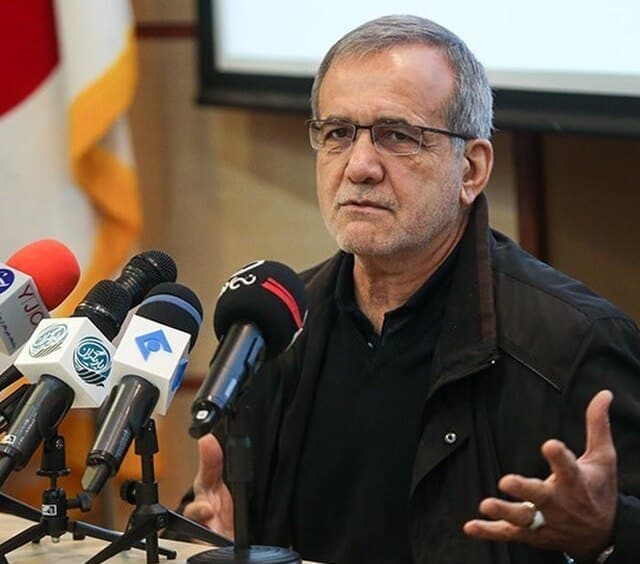
President Masoud Pezeshkian has continued to speak forcefully about Iran’s worsening water crisis, calling it “severe and unprecedented.” In an August 11 meeting with media executives and journalists, he pointed to a 40–45 percent drop in rainfall over the past year and the sharply reduced reservoir levels, warning: “We are in a severe and unprecedented crisis, but it seems we want to close our eyes and ignore reality.” Addressing critics who blame mismanagement, he said: “fine, then tell me what to do. All the people speaking were themselves in charge and brought us to this point. It was all of them who brought us here -there has been no one else.” Pezeshkian cautioned that without immediate action, water supplies to major cities such as Tehran and Karaj could collapse entirely, urging the involvement of experts and the adoption of responsible policies to curb wasteful consumption. A day later, on August 12, Israeli Prime Minister Benjamin Netanyahu addressed the Iranian people directly, calling on them to rise up against the regime and pledging that once political change comes, Israel, a leader in water desalination technologies, would stand alongside them and help the nation recover from its acute water crisis.
For the first time, the full count of arrests by Iran’s police during the 12-Day War has come to light. Iran’s police spokesman, Gen. Saeed Montazeralmahdi, reported yesterday on the number of arrests made by authorities since the recent 12-day war. He said 21,000 suspects had been detained, without specifying the charges against them or the circumstances of their arrests. Montazeralmahdi praised citizens who had alerted police to suspicious activity, saying their reports had made the arrests possible. He also revealed that police had recaptured 127 inmates who had escaped from Evin Prison after an Israeli airstrike during the war — a statement that contradicts earlier regime denials that any prisoners had escaped.
Also yesterday, France, Germany, and the United Kingdom announced they would reimpose United Nations sanctions on Iran if it does not return to nuclear negotiations by the end of the month. The three nations said they are considering triggering the “snapback” mechanism, which would restore all penalties lifted under the 2015 nuclear deal, including trade, financial, and arms embargo measures, without requiring a new UN Security Council vote, thereby bypassing the possibility of a veto from other member states. The warning followed the collapse of talks in Istanbul in July and Tehran’s failure to respond to an extension proposal, a move likely to deepen Iran’s diplomatic and economic isolation.
On August 9, 2025, Iran held direct talks with the Financial Action Task Force (FATF) for the first time since 2019, in an effort to secure its removal from the watchdog’s blacklist. Iran is one of only three nations currently on the blacklist, alongside North Korea and Myanmar. Being on the list marks a country as high-risk, restricting its access to global markets, complicating cross-border transactions, and subjecting it to heightened scrutiny. As part of its bid to improve its standing, Iran’s parliament recently approved accession to the Palermo Convention against transnational organized crime and has submitted the ratification documents to the UN Secretary-General. However, full removal from the list remains elusive: Iran has yet to ratify the CFT convention on countering the financing of terrorism, and its continued financial support for groups such as Hamas and Hezbollah poses a major obstacle to progress.